Jul 22, 2009

John Cage: Renaissance Man

The works of John Cage gave artists the permission to do anything they will - to break down the old and construct the new. To Cage, knowledge was limitless. He is praised by critics as a pioneer of electronic music and one the most influential American composers of the 20th century. Below is a piece entitled Dream (1948), written during what some refer to as his phase of 'Oriental quiescence'.


Related posts:
Yaz and 80s British Synthpop
The Hangman's Beautiful Daughter

Jul 21, 2009

Jul 16, 2009

Design Lover: Silvia Stave Modernist Cocktail Shaker


The story behind a piece can greatly influence the value.

For over sixty years, design enthusiasts incorrectly attributed this modernist cocktail shaker to the head of the Bauhaus metal workshop, Marianne Brandt. However, the original drawing for the piece surfaced and was confirmed, shortly before her death in 1994, by Swedish designer Silvia Stave to be hers.The piece also appears in the original 1930 catalogue for C.G. Hallberg, Stave's employer.

Stave is noted for her assured, serene, unbroken, and undecorated designs. Confident in her talent and understanding of the art of silversmithing, Gustav Hallberg quickly promoted Stave to Director of Design for Hallberg's. She went on to win an award at the 1937 Paris International Exhibition.

In 1996, an original of the above cocktail shaker sold at auction for $11,675 (price adjusted to 2009 currency rate).

Silvia Stave's modernist cocktail shaker has been reintroduced by Alessi. Available online.

Related Posts:
Design Lover: Harry Bertoia Bird Chair
Design Lover: Fredrick Färg
Design Lover: The Bahaus Birdhouse

Jul 15, 2009

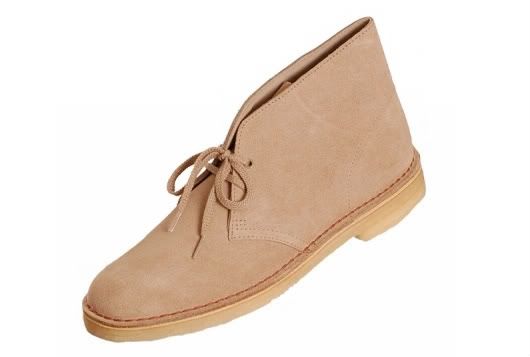
10 Things You Should Know About Desert Boots

The inspiration
Chupple Sandal and WW II Dutch Army Boot
  1. the idea for the Desert Boot started taking shape during WWII when officers began having boots made for them in the markets of Cairo
  2. the comfort of the boot was inspired by the moldable leather chupple worn by Indian troops on the North West frontier and admired by Western officers from the Western Desert visiting Burma
  3. based loosely on the style of the Dutch voortrekker boot that was introduced to Western Desert warfare by the South Africa division of the Eighth Army
  4. created on the original army boot last (the original wooden form used to shape the shoe) that provided comfortable footwear to the Eighth Army
  5. created by Clarks in 1949 by bringing the moldability of the chupple together with the strength of the voortrekker boot and the comfort of the combat boot
  6. first Clarks shoe to be marketed in America
  7. over 12 million Clarks Desert Boots have been sold worldwide since their creation
  8. the boot was launched at the Chicago Shoe Fair in 1950
  9. construction of the Desert Boot has remained virtually unchanged since its inception
  10. the Desert Boot celebrates its 60th anniversary this year


1950s Reissue

Jul 13, 2009

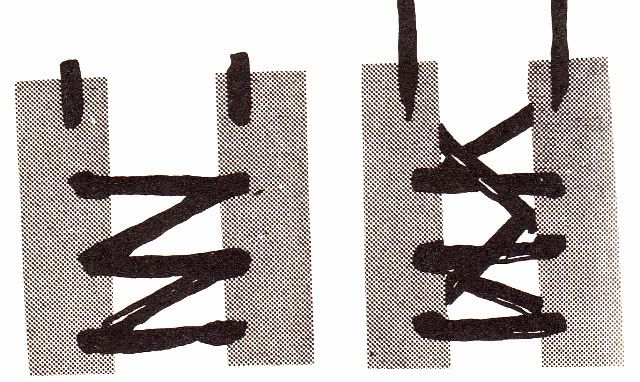
6 Different Ways to Tie a Shoe


  • Classic crisscross - outside, inside, outside and tighten from the bottom
  • Combination crisscross - an easier version of the classic. Outside, outside, outside and tighten by pulling laces.


  • Spaced crisscross - X-pattern eyelets in the center.
  • Horizontal lacing - Bring one end straight up to the top of the eyelet, lacing the other end in the desired effect.


  • Zigzag - one end straight up to the top of the eyelet, but the other end laces in a crisscross pattern.
  • Horizontal underlacing - outside down, inside up across, outside down.

Tips:
  • Experiment with shoes or boots with any number of eyelets. 
  • Hint --> combat boots are fun.
  • Pull the laces up so the longer end is on the right. When you tie your bow, twist the longer end twice around the first loop before pulling it through.
  • Cotton laces tie better.

Related Posts:
How to Wear a Handkerchief
How to Tie a Skinny Tie

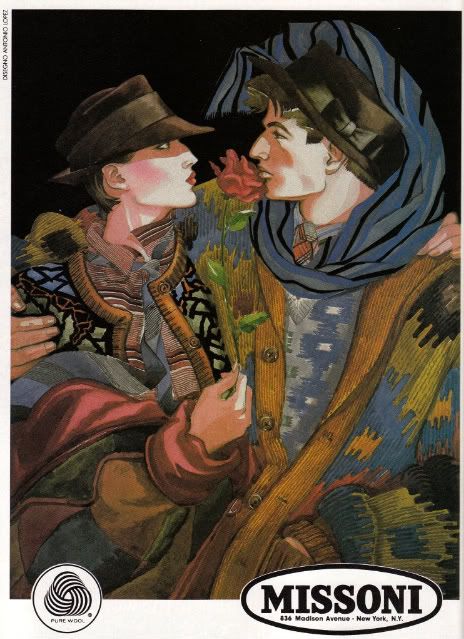
Vintage Missoni

Missoni
1984

Quote of the Week - Susan Sontag


Fashion becomes the discovery that anything is all right if worn by the right person. Susan Sontag

Jul 9, 2009

12 Do's and Don'ts for Dining Out


Don't
  1. start eating before anyone else is served.
  2. gesture with silverware.
  3. lie to the waiter saying everything is okay when it is not.
  4. snap your fingers for attention.
  5. order for your partner unless they have given you permission.
  6. lay anything on the table - including your phone.
  7. order a vodka paralyzer before dinner.
  8. talk to your menu - the waiter is beside you.
  9. wear your running shoes and distressed denim unless you're at a concession stand.
  10. get drunk.
  11. hold your cutlery in a death grip.
  12. settle for anything but the best.
Do
  1. give compliments where compliments are due.
  2. fill out the comment form - management really does read them.
  3. keep your voice down.
  4. use your napkin often.
  5. send your wine back if it is unacceptable.
  6. tip 20%. More if the service is outstanding. The waiter has to share that tip with the bartender, bussers, host, kitchen staff, floor supervisor and management.
  7. break off a small piece of bread, butter it and eat it. Don't butter the whole thing at once.
  8. look the waiter in the eye.
  9. place your napkin on your lap as soon as you sit down. When you're finished your meal use your napkin, fold it loosely and place it on the table.
  10. pull the chair out for your female date, wait until she's seated then sit down. If this is too old fashioned for you at least wait until she takes her seat before you sit down. If you're out on business wait for the women to be seated then take your seat.
  11. rise to shake someone's hand if you are introduced.
  12. get your bearings straight on manoeuvring a typical table setting.

Old Fashioned Granola Recipe